

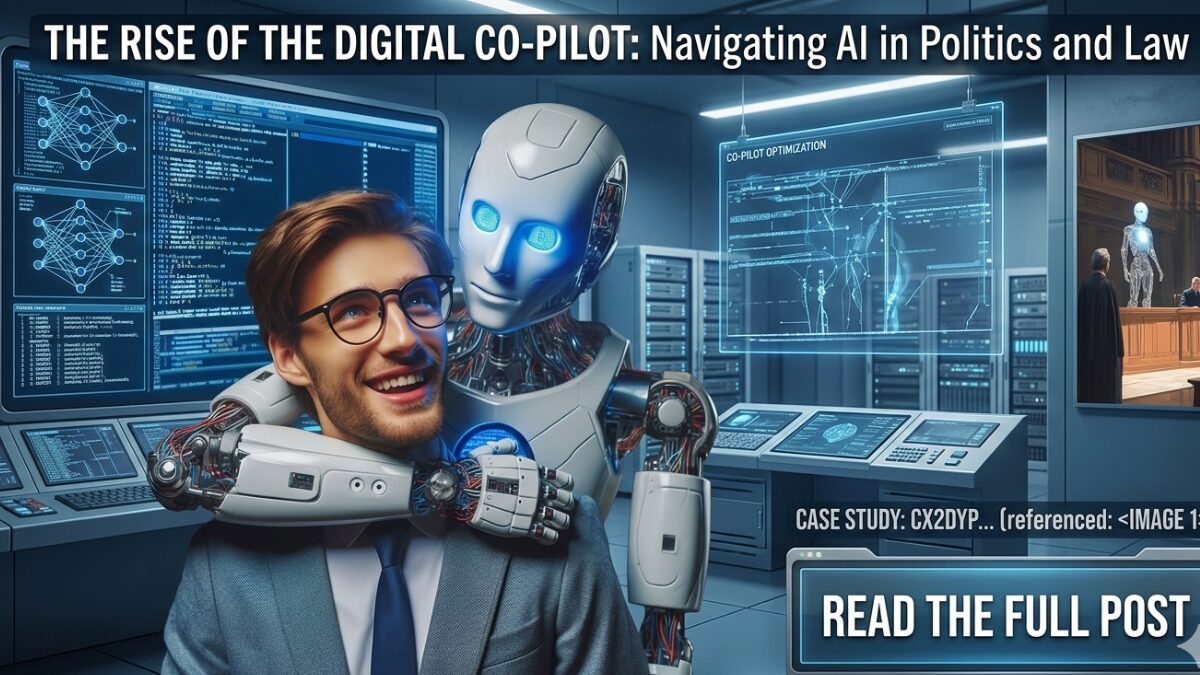
In the ever-evolving theater of political warfare, the weapons of choice have shifted from soapboxes and radio broadcasts to data-driven social media algorithms and, most recently, Generative Artificial Intelligence (AI). The recent BBC report highlighting the explosion of AI-generated content in political advertising serves as a clarion call. We are no longer approaching a digital frontier; we are living in it, and the lines between reality and fabrication are blurring at an unprecedented rate.
The Genesis of the AI Political Revolution
To understand the current surge, we must look at the accessibility of the technology. Only a few years ago, creating a “deepfake”—a hyper-realistic video or audio recording of a person saying or doing something they never did—required sophisticated hardware and high-level programming skills. Today, anyone with a smartphone and a modest subscription to an AI platform can generate convincing imagery, cloned voices, and persuasive text in seconds.
This democratization of powerful media tools has fundamentally changed the “cost of entry” for political misinformation. Campaigns, third-party PACs, and even lone-wolf actors can now produce high-volume, personalized content that targets specific voter anxieties with surgical precision.
The Anatomy of AI Influence in Elections
How exactly is AI being deployed in the political arena? The applications are multifaceted, ranging from the mundane to the deeply deceptive.
1. The Rise of “Deepfakes” and Synthetic Media
Perhaps the most alarming use of AI is the creation of synthetic video and audio. We have already seen instances globally where candidates’ voices are cloned to make it appear as though they are making controversial statements just days before an election. These “october surprises” are designed to go viral before they can be effectively debunked.
2. Micro-Targeting and Persuasive Messaging
AI excels at pattern recognition. By analyzing vast datasets of voter behavior, social media interactions, and consumer habits, AI algorithms can craft thousands of variations of a single political message. These messages are then delivered to the specific individuals most likely to be swayed by them, creating a fragmented information environment where different voters are essentially seeing different realities.
3. Rapid Response and Content Generation
The speed of the modern news cycle demands instant reactions. AI allows campaign teams to generate press releases, social media posts, and even video responses to breaking news in real-time. While efficient, this “speed over accuracy” approach often bypasses traditional fact-checking protocols.
The Ethical Quagmire: Truth vs. Perception
The integration of AI into politics raises profound ethical questions. At the heart of the issue is the concept of “informed consent” within a democracy. If a voter makes a choice based on a video that looks real but is entirely fabricated, is that democratic process still valid?
The Erosion of Public Trust
One of the most insidious effects of AI in politics isn’t just that people will believe lies; it’s that they will stop believing the truth. As deepfakes become more common, politicians can dismiss genuine, incriminating evidence as “just another AI fabrication.” This phenomenon, known as the “Liar’s Dividend,” allows the guilty to escape accountability by casting doubt on the very nature of objective reality.
The Problem of Disclosure
Should AI-generated content be clearly labeled? While many advocacy groups and tech companies suggest “watermarking” AI content, the implementation is fraught with difficulty. Malicious actors are unlikely to follow voluntary labeling guidelines, and technical workarounds to remove watermarks are constantly being developed.
The Regulatory Battleground: Legislation vs. Innovation
Governments around the world are currently scrambling to catch up with the pace of AI development. The BBC report underscores the lag between technological capability and legal oversight.
The Global Response
- The European Union: The EU has been a frontrunner with the AI Act, which seeks to categorize AI applications based on risk. Political AI is often viewed as high-risk, requiring transparency and strict data governance.
- The United States: In the U.S., the approach has been more fragmented. While several states have passed laws regarding deepfakes in elections, federal legislation often stalls due to concerns over the First Amendment and free speech.
- The Role of Big Tech: Social media platforms like Meta, X (formerly Twitter), and Google find themselves as the de facto moderators of political discourse. Their policies on AI-generated ads are inconsistent, often relying on automated systems that can be easily fooled.
The Psychological Impact: How AI Highjacks the Human Brain
To truly understand why AI-generated political content is so effective, we must look at cognitive psychology. Humans are evolutionarily hardwired to trust their eyes and ears. When we see a video of a leader speaking, our “System 1” thinking (fast, intuitive, emotional) accepts it as fact before our “System 2” thinking (slow, analytical, logical) can intervene.
AI is designed to exploit these cognitive biases. By using “affective computing,” AI can analyze which images or tones of voice trigger fear, anger, or tribal loyalty, creating content that is psychologically optimized to bypass rational thought.
SEO Strategy and the Future of Political Journalism
As the digital landscape becomes saturated with AI content, the role of high-authority, human-verified journalism becomes more critical than ever. For news organizations and political analysts, maintaining SEO dominance requires a focus on E-E-A-T (Experience, Expertise, Authoritativeness, and Trustworthiness).
Keywords and User Intent
The surge in interest regarding AI in politics means that search terms like “how to spot a deepfake,” “AI election interference,” and “political AI regulations” are seeing massive traffic. Providing comprehensive, well-researched answers to these queries is the best way for legitimate outlets to combat misinformation.
The Importance of Human-Centric Content
Search engines are increasingly prioritizing content that demonstrates a “human touch.” This includes original reporting, first-person interviews with experts, and nuanced analysis that AI—which largely reshuffles existing data—cannot replicate.
Case Studies: When AI Met the Ballot Box
The BBC article touches on several instances where AI has already impacted elections. Looking at these cases provides a roadmap for what to expect in the future.
- The 2024 Global Election Year: With billions of people heading to the polls in the US, UK, India, and beyond, 2024 is being hailed as the “AI Election Year.” We have already seen AI used to resurrect dead politicians for endorsements and to create fake robocalls in primary elections.
- The “Shadow” Campaigns: Much of the AI content isn’t coming from the official campaigns themselves but from “shadow” organizations. These groups operate in the shadows, using AI to produce hyper-partisan content that the official candidates can disavow while still reaping the benefits.
How to Protect Yourself: A Voter’s Guide to the AI Era
In this new environment, media literacy is no longer an optional skill; it is a necessity for survival.
- Check the Source: Is the content coming from a verified, reputable news organization or a random social media account?
- Look for Artifacts: While AI is getting better, many deepfakes still have “tells”—glitches in the background, unnatural blinking patterns, or mismatched audio syncing.
- Cross-Reference: If a politician says something shocking, check multiple news outlets. If it’s real, it will be reported widely. If it’s only on one obscure YouTube channel, be skeptical.
- Understand Your Own Biases: We are most likely to believe misinformation that confirms our existing beliefs. Be extra critical of content that makes you feel an immediate sense of outrage or vindication.
The Long-Term Outlook: Is Democracy AI-Proof?
The rise of AI in political advertising doesn’t necessarily mean the end of democracy, but it does mean the end of “politics as usual.” We are entering an era of perpetual information warfare.
The solution cannot be purely technical. While better AI-detection tools are necessary, the real defense lies in a more resilient electorate and a renewed commitment to institutional transparency. We must demand that our political leaders pledge not to use deceptive AI, and we must support the independent journalism that works to unmask those who do.
Conclusion
The BBC’s report on the surge of AI in political ads is a snapshot of a turning point in human history. Technology has given us the power to create any reality we can imagine. The question for the next decade is whether we will use that power to enhance political discourse or to destroy the very concept of shared truth.
As we move forward, the “human tone” in our politics—the ability to have honest, face-to-face, and authentic debates—becomes our most valuable asset. In an age of artificial intelligence, our most potent defense is our own, very real, human intelligence.