

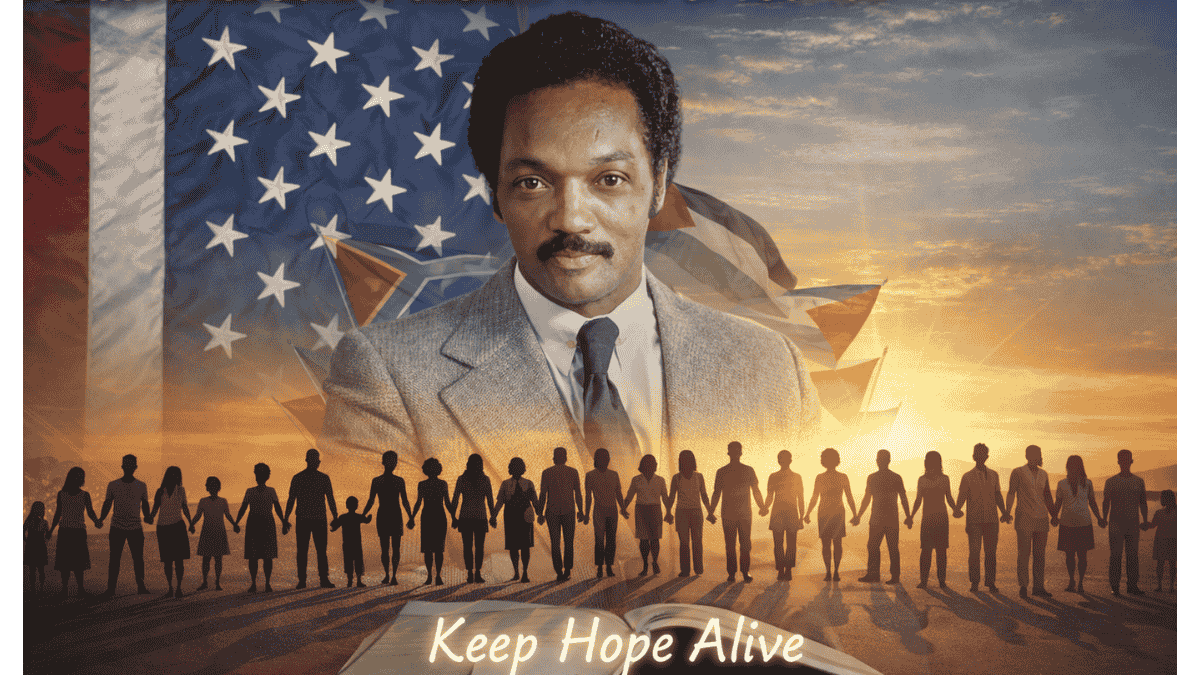
The passing of Reverend Jesse Jackson at the age of 84 marks the end of an era, but his influence continues to ripple through every corner of the globe. While many remember him as the lieutenant to Dr. Martin Luther King Jr. or the trailblazer who paved the way for Barack Obama, a recent retrospective by The Guardian reminds us that Jackson was, above all else, a global statesman. From the front lines of the anti-apartheid movement in South Africa to the complex diplomatic corridors of the Middle East, Jesse Jackson’s legacy is defined by a “third world mindset”—a conviction that the struggle for dignity in America was inextricably linked to the struggle for freedom everywhere.
Jesse Jackson : A Bridge Between Generations and Continents
Jesse Jackson was more than just a figure in the American Civil Rights Movement; he was a living bridge. He connected the non-violent resistance of the 1960s with the progressive, populist movements of the 21st century. Many historians argue that he was the precursor to figures like Bernie Sanders, advocating for economic populism and the rights of the marginalized long before such positions were considered “mainstream” in the Democratic Party.
But perhaps his most profound contribution was his role as a “trenchant critic of US imperialism.” Jackson didn’t just fight for the American Dream; he fought for a world where no person was oppressed by the weight of systemic racism or economic exploitation. This internationalist perspective allowed him to see the world not as a collection of competing superpowers, but as a community of people sharing a common struggle.
The Scourge of Apartheid: A Moral Clarion Call
In the 1980s, when the Reagan administration was practicing “constructive engagement” with the white minority government in South Africa, Jesse Jackson was a lone, thunderous voice calling for a different path. He didn’t view apartheid as a geopolitical pawn in the Cold War; he saw it as a moral disgrace.
Jackson’s activism was instrumental in shifting the American conscience. He organized rallies, mobilized voters, and pressured Congress to eventually overturn President Reagan’s veto and pass the historic Comprehensive Anti-Apartheid Act of 1986. For activists in South Africa, Jackson was a “beacon of hope.” At a time when the US government seemed to favor the status quo, Jackson provided the world with a vision of an America that stood on the right side of history.
Advocacy for Palestinian Rights: Jesse Jackson: A Man Ahead of His Time
Long before the current debates surrounding the Middle East, Jesse Jackson was an early and vocal advocate for Palestinian rights. In 1979, following the resignation of UN Ambassador Andrew Young, Jackson led a delegation to the Middle East. He did something then-unthinkable: he met with Yasser Arafat and argued for direct negotiations with the PLO.
Jackson drew clear, unmistakable parallels between the Palestinian cause and the African American struggle for civil rights. He spoke of a “cycle of pain” and “human needs” that transcended borders. While his stance was controversial at the time and drew sharp criticism from some quarters, Jackson’s goal was to mainstream the issue as a matter of universal human rights rather than a purely nationalistic dispute. He believed that freedom for the Palestinian people was a necessary part of the global resistance against the “triple evils” Dr. King had identified: racism, economic exploitation, and militarism.
The Great Negotiator: Diplomacy Beyond the State Department
Perhaps the most “human” aspect of Jackson’s international legacy was his uncanny ability to negotiate the release of prisoners and hostages in “enemy” territories. Where official diplomacy failed or refused to engage, Jackson stepped in.
His list of humanitarian achievements is staggering:
- Syria (1984): Negotiated the release of Navy Lt. Robert Goodman.
- Cuba (1984): Secured the freedom of 48 political prisoners and Americans.
- Iraq (1990): Negotiated the release of hundreds of foreign nationals held as “human shields” before the Gulf War.
- Yugoslavia (1999): Freed three US soldiers captured during the Kosovo conflict.
Jackson’s philosophy was simple: talk. He believed in diplomacy through conversation and cooperation rather than brinkmanship and aggression. As he famously told President Reagan regarding Syria: “I know we have a no-talk policy; that’s why I’m asking you to break it.”
“I Am Somebody”: The Roots of a Global Vision
To understand Jackson’s global impact, one must look at his roots in the Jim Crow South. Born into poverty in Greenville, South Carolina, Jackson learned early on that every day was a negotiation for survival. He often remarked, “I was born in the slum, but the slum was not born in me.”
This personal experience with pain and exclusion gave him a unique empathy for the “despised and demeaned” of the world. He didn’t look down on the people of the Global South; he saw them as his brothers and sisters. His “Rainbow Coalition” wasn’t just a domestic political strategy; it was a vision for a world where the marginalized were finally placed at the center of the story.
The Enduring Impact on Modern Politics
Jesse Jackson’s influence on the Democratic Party cannot be overstated. By shifting Black politics from the margins to the center, he created the blueprint for the multiracial, progressive coalitions we see today. He proved that a candidate could speak truth to power and still command a significant portion of the electorate.
When we look at the current political landscape—the rise of progressive leaders, the focus on voting rights, and the increasing calls for international solidarity—we see the fingerprints of Jesse Jackson. He was a “tree shaker” who spent his life making “jelly” for others to enjoy.
Conclusion: Jesse Jackson Legacy of Unwavering Hope
As tributes continue to pour in from world leaders like President Biden, Barack Obama, and even former political rivals, the consensus is clear: Jesse Jackson was an “American original.” He was a man of rhythm, rhyme, and relentless action.
He leaves behind a world that is more aware of its interconnectedness. He taught us that love is a potent force in public life and that justice is never given—it must be fought for. Jesse Jackson may have passed, but his mantra, “Keep Hope Alive,” remains the marching order for a new generation of activists worldwide.
In the end, Jackson’s greatest achievement wasn’t a specific policy or an election win; it was the cultural magnitude of his presence. He showed millions of people—from the streets of Chicago to the townships of Cape Town—that they were “somebody.” And because of him, the world is a little bit closer to becoming the “beloved community” he so fervently believed in.